Data layer
One operational source of truth every agent can use.
ERP, CRM, TMS, spreadsheets, and field systems are unified into typed workspace data, so agents execute from live context instead of stale exports.

The Platform
A workspace is the home for your project: data model, sources, analytics, automations, feeds, groups, tools, agents, schedules, and audit history in one governed runtime. That is how Zipdata delivers your unified data, automation, and agentic work without rebuilding the infrastructure from scratch.
What runs underneath
Multiple workspace surfaces share one foundation: live data, continuous watches, generated intelligence, governed tools, and a memory of what happened before — so the operation keeps working without waiting for someone to refresh it.
Data layer
One operational source of truth every agent can use.
ERP, CRM, TMS, spreadsheets, and field systems are unified into typed workspace data, so agents execute from live context instead of stale exports.
Watch engine
Every condition can be monitored continuously.
Thresholds, record changes, SLA risks, and exceptions run through always-on watches, giving agents the signal they need before the next review cycle.
Intelligence studio
Briefings, updates, and summaries are generated from live data.
The platform turns current records into morning briefings, risk summaries, customer updates, collections lists, and other feed outputs on cadence.
Actions
Agents can move work forward under governance.
Tool grants, scripts, approval tiers, and audit trails let agents route escalations, draft communications, update records, and pause for approval when consequences matter.
Learning loop
The operating model gets sharper as the workspace runs.
Runtime events, knowledge items, and context snapshots help agents remember what worked, which risks preceded outcomes, and where new automation would help.
Workspaces
The workspace houses the brief, schema, data, analytics, automations, feeds, groups, tools, agents, tasks, and approvals for your project. It can start as reporting, become automation, and later support agents without moving to a new platform.
Every workspace runs on a typed schema — entities, fields, relations, attachments, and records with real columns. Analytics, automations, feeds, and agents all work from the same data.
Watches evaluate thresholds, segments, KPIs, and record-level changes. When a condition fires, it can create a feed, trigger an automation, or invoke an agent/tool path.
The SQL workbench, KPI model, saved reports, and feed publishing flow let the workspace answer questions and deliver intelligence from the same schema.
Workspace Runtime
The platform links data, automation, generated outputs, callable tools, schedules, and approval policy so each project is delivered as one operated workspace.
Twelve feed types — briefings, scorecards, alerts, statements, customer updates, documents — generated from workspace data and shaped for each group.
Native tools, Python, webhooks, and connected integrations let automations and agents act without hard-coding every project from scratch.
Approval policy travels with the workspace. Low-risk work can run or draft automatically; consequential work queues for human review.
Delivery Surfaces
Integrate, Analyse, Execute, Output, Govern. These are the surfaces Zipdata configures to deliver unified data, process automation, and agentic transformation projects from the same workspace foundation.
Layer 1
Sources materialises entity schemas, connector pulls, CSV imports, and webhooks into a live typed PostgreSQL model that agents, analytics, and humans can all trust. Every field has a real column type — no JSONB blobs, no schema drift.
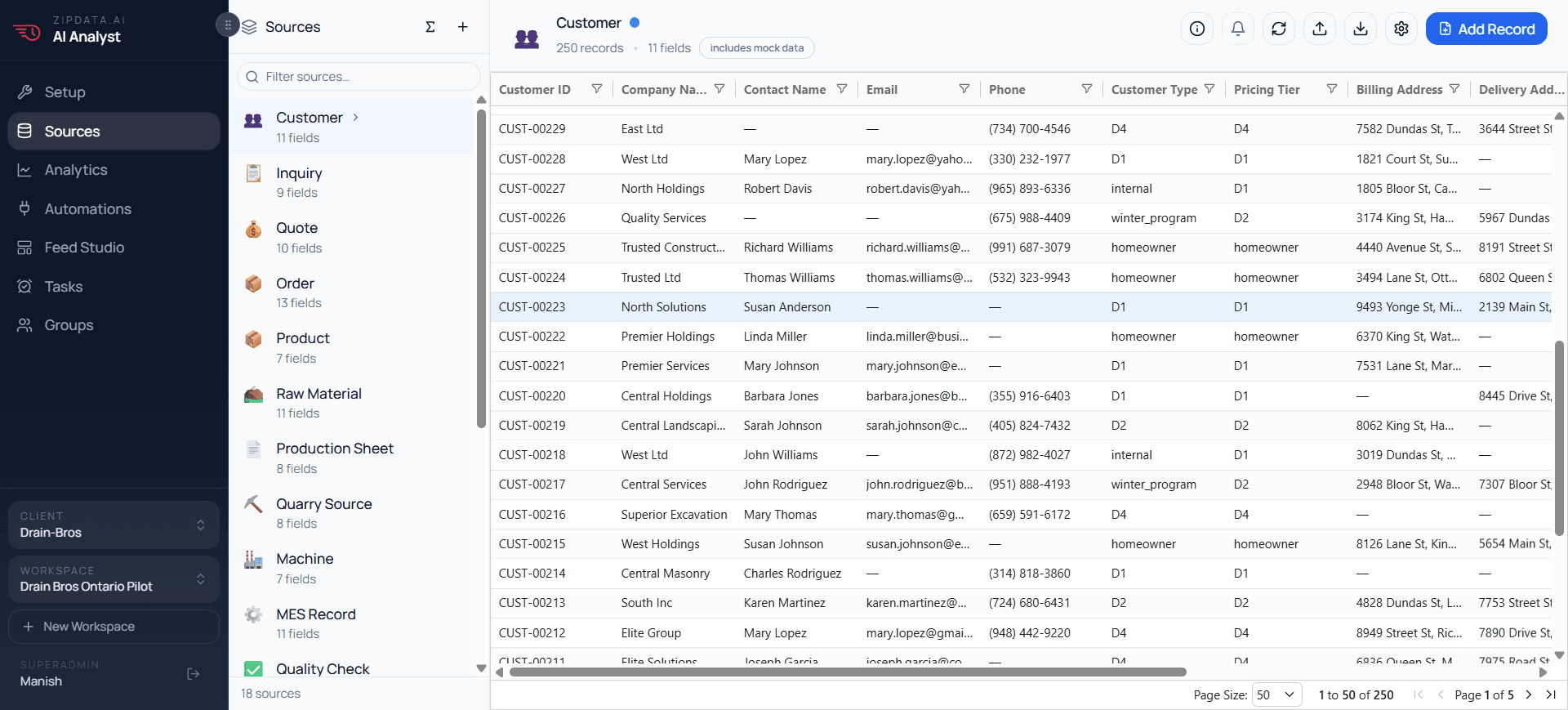
Layer 2
Analytics, KPI computation, passive proposals, and Analyst Watches scan live records continuously. Exceptions surface before the daily stand-up, not after. The analyst layer proposes new feeds, watches, and automations based on detected patterns.
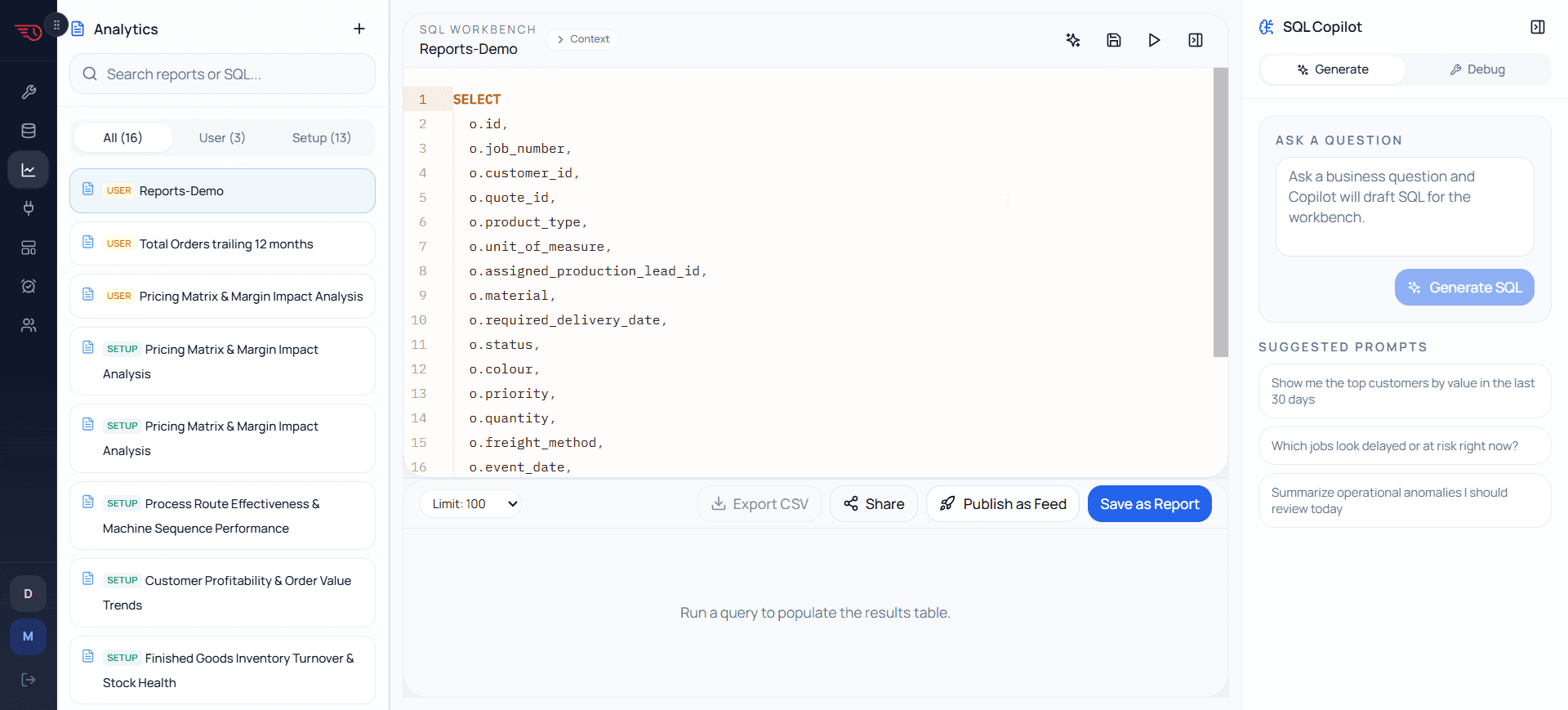
Layer 3
Agents run as named roles with explicit triggers, tool grants, action capabilities, and approval policies. Automations provide the script and tool substrate for repeatable work. Every agent action is scoped by a deny-by-default tool allowlist.
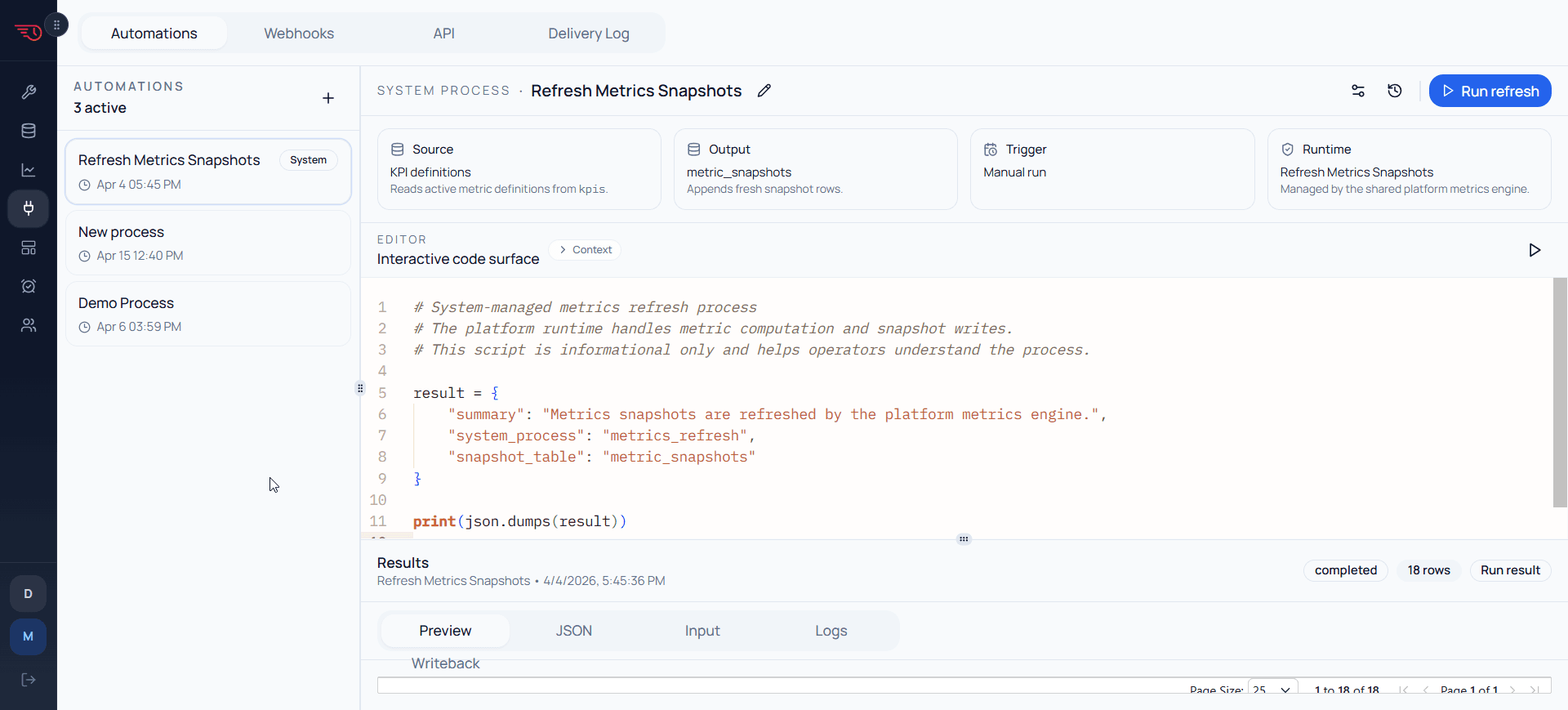
Layer 4
Feed Studio generates 12 feed types from live workspace data — briefings, dashboards, scorecards, alerts, reports, forecasts, customer updates, documents, and more. Feeds are versioned artifacts delivered to groups on a committed schedule.
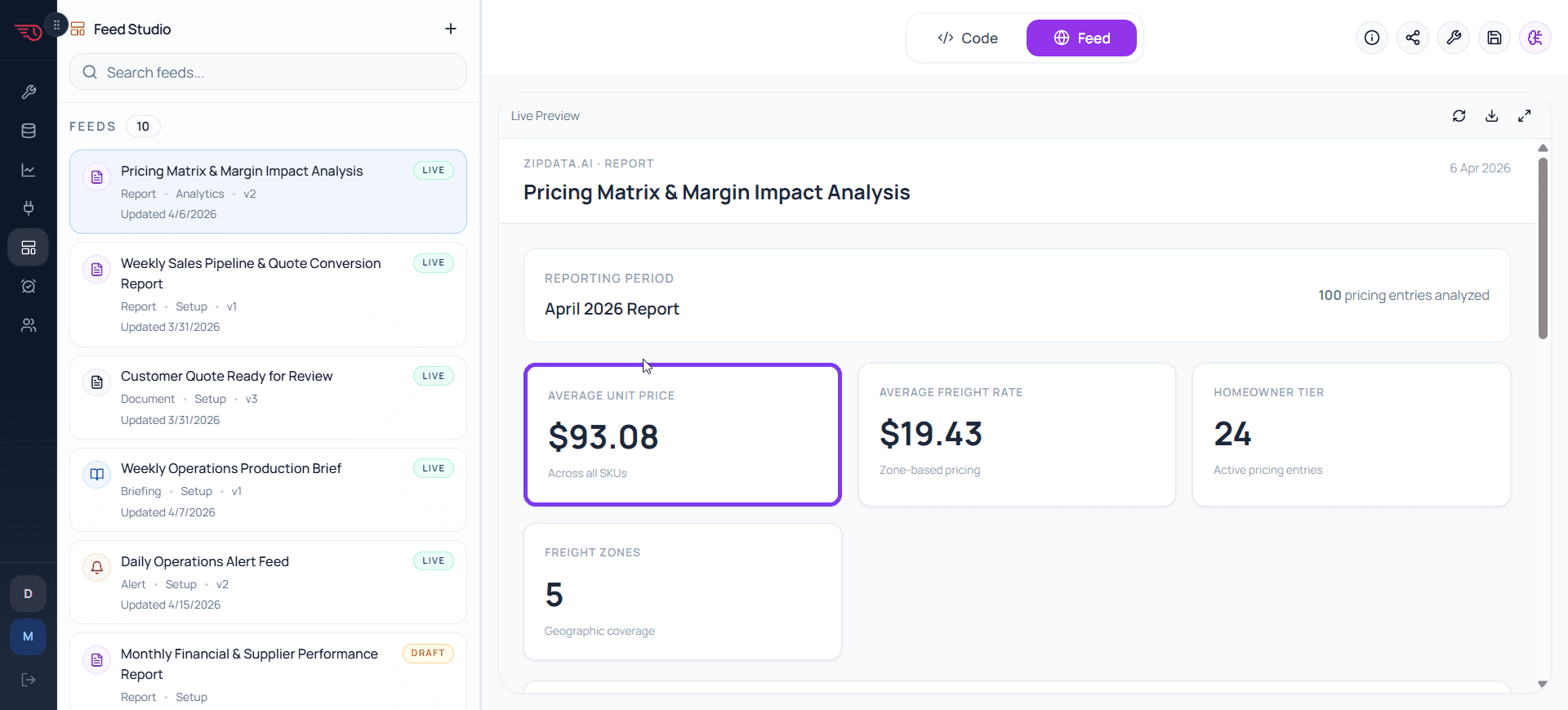
Layer 5
Every action an agent can take is assigned a governance tier based on how consequential it is. Low-risk actions run automatically. Customer-facing or financially material actions require explicit approval. Every run is logged with reasoning, action, and who approved it.
Setup Spine
Describe your operation. Zipdata proposes the entity model, KPI definitions, automations, feed templates, delivery groups, and agent configurations needed for that project type. Each step is reviewed before it becomes part of the workspace.
Plain-language description of the operation. Zipdata generates entity models, KPI definitions, and connector scripts from this brief.
Entity schema is proposed and approved step by step. Every field gets a typed column — text, number, date, select, relation.
Connector scripts are generated for every source system. Pull schedules, authentication, and field mappings are configured here.
E2B sandbox runs Python scripts to seed realistic records. The workspace is operational before live data is connected.
KPI SQL formulas are proposed from the entity model. OTIF, SLA, margin, and custom metrics are defined and verified.
Initial SQL queries are generated. The workspace analytics library starts populated with the KRAs that matter.
Analyst Watches are configured: thresholds, segment conditions, and trigger modes. Each watch has an explicit output action.
Feed Studio builds the first briefings, scorecards, and alert templates from live query data. Delivery schedule is committed.
Groups are created, delivery is activated, and the workspace goes live. First automated briefing within 48 hours.
Feeds, Groups, and Tools
Feeds create the client-facing outputs. Groups personalize who receives them. Tools let automations and agents perform controlled actions. Together, they turn the workspace from a data project into an operated delivery environment.
NativeCore reads, writes, KPI computation, watch evaluation, feed generation, and entity write-backs built directly into the platform. Zero latency, no auth overhead.
PythonSandboxed Python for transforms, forecasting, enrichment, and file processing. Secrets are injected; the sandbox has no default network access.
WebhookOutbound HTTP contracts for ERP write-backs, legacy systems, and custom notification pipelines. Payload schema is defined on the tool.
MCPModel Context Protocol integrations for regulated environments where data must stay within your trust boundary. Bring your own MCP server URL.
250+ appsManaged OAuth access to Salesforce, Jira, Gmail, HubSpot, Slack, Linear, ServiceNow, and 245+ more. OAuth connections are managed per workspace.
TestSchema-generated synthetic responses for demos, agent development, and approval-flow testing — no live side effects.
Governance Model
Approval tiers derive from each tool's side-effect class — not from per-agent configuration. Add a new tool and it inherits the right tier automatically. The governance surface does not expand as your operation grows.
Configure it for your operation
Pick a domain template, seed realistic data, and see your first agent-generated briefing before the demo call begins.